XRP Ledger
12 days agoNews Editor

David Schwartz says XRPL slowdown exposed protocol and monitoring weaknesses

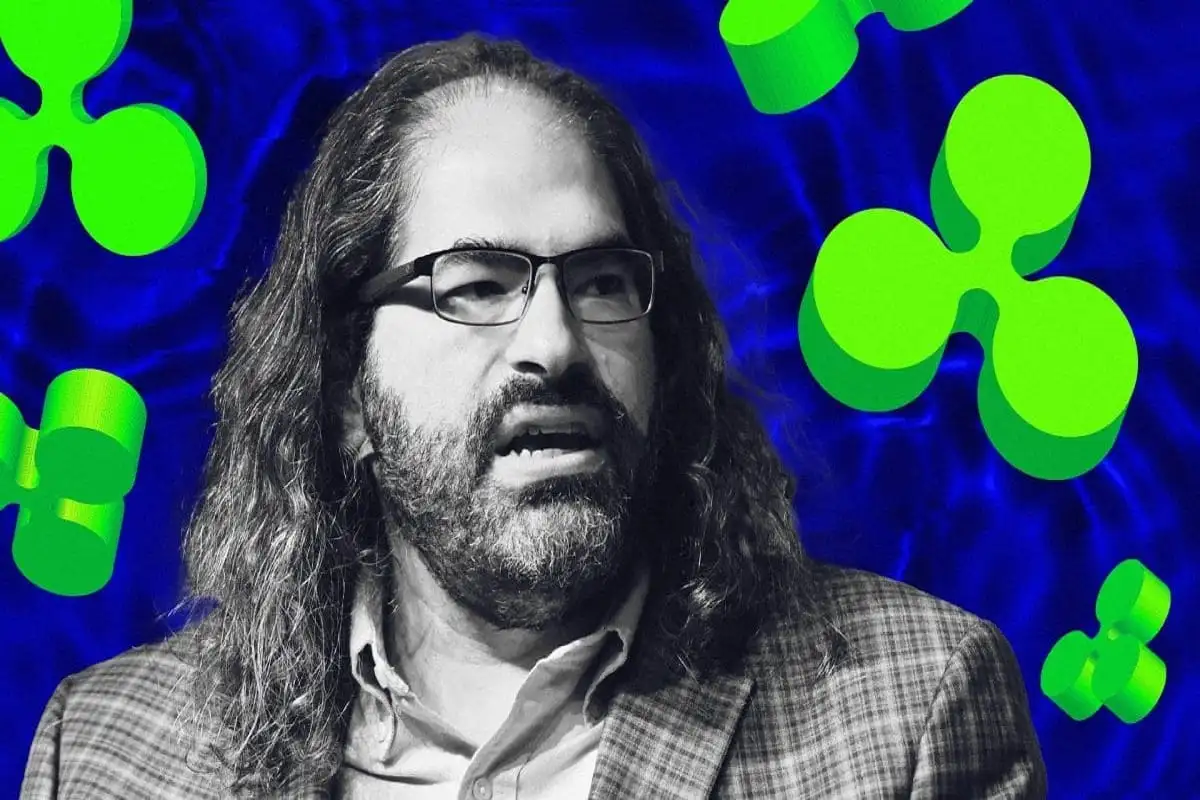
XRP Ledger recently suffered a technical issue that slowed transaction processing, prompting public comments from Ripple’s former chief technology officer and XRPL co-creator David Schwartz. He said ledger closures were running much slower than usual, a pattern that could point either to a targeted attack on the network or to a latent bug in the code being triggered. Schwartz said the incident reduced the system’s technical safety margin, but he pushed back on claims that the blockchain has a single point of failure. He said XRPL remains fully decentralized and that the shutdown or overload of major hub nodes would not disrupt the network as a whole. The episode also exposed weaknesses in XRPL’s monitoring setup under peak load. According to Schwartz, his own node was hit by a surge in requests that caused its local RPC connection to hang, which led to the loss of key diagnostic data. Engineers and community operators are now manually reviewing retained logs in an effort to fully remove the flaw. The report was cited by Techub and attributed to U.Today.

440
David Schwartz says XRPL slowdown exposed protocol and monitoring weaknesses
Ripple
24 days agoNews Editor

Ripple CTO David Schwartz to Present Next-Generation XRP Architecture at Swell 2026

Ripple Chief Technology Officer David Schwartz has confirmed that he will deliver a keynote on the main stage at Swell 2026, according to Techub News, which cited U.Today. The presentation is set to focus on Ripple’s next-generation XRP architecture. The reported plan includes integrating AI and privacy features into that architecture. No additional technical details, launch timeline, or product specifications were disclosed in the brief. The update centers on Schwartz’s confirmed appearance at the event and the stated topic of his keynote, placing the spotlight on how Ripple plans to frame the next phase of XRP-related infrastructure at Swell 2026.

560
Ripple CTO David Schwartz to Present Next-Generation XRP Architecture at Swell 2026
Ripple
24 days agoNews Editor

Ripple’s former CTO and Flare CEO debate the scale of lending on XRPL

Ripple former Chief Technology Officer David Schwartz and Flare CEO Hugo Philion have publicly disagreed over how large the lending market on the XRP Ledger could become. Schwartz said the native feature has not yet been built out and that early developers still have significant room to participate. Philion countered that Schwartz may still be underestimating the opportunity in lending and said Flare will move ahead with its own lending logic instead of waiting for a major XRPL upgrade. At the same time, XLS-66, a proposal tied to lending functionality on the XRP Ledger, remains under validator voting. Data cited in the report shows that investors have already used Flare infrastructure to borrow $7.95 million in RLUSD against 10.8 million wrapped XRP as collateral. The item was carried by Techub, citing BeInCrypto.

510
Ripple’s former CTO and Flare CEO debate the scale of lending on XRPL
Bitcoin
3 months agoNews Editor

David Schwartz says post-vote BIP-110 chain amounts to an attack on Bitcoin

Ripple former chief technology officer David Schwartz said on Aug. 31 that backers of the Bitcoin BIP-110 fork crossed the line from governance into attacking the network after rejecting the soft-fork outcome and continuing to run an independent proof-of-work chain. In his view, losing a consensus dispute does not justify launching a separate Bitcoin chain, and doing so is itself an attack. The BIP-110 fork chain was activated at block height 961,640 through a flag-day hard fork. It replaced the SHA256d mining algorithm with BLAKE2b, introduced a new 164-byte block header, and added temporary rules that cap block size at about 300 KB until September 2027. Bitcoin Knots developer Luke Dashjr defended the changes, saying BLAKE2b lacks known weaknesses associated with SHA256d and that the redesigned block header closes a block-withholding flaw that previously required miner monitoring to detect. The fork grew out of Bitcoin Core removing old limits on OP_RETURN data, which opened more block space to non-monetary content including Ordinals and Runes. BIP-110 supporters wanted to preserve that space for payments. After the split, supporting mining pool Roughnecks produced only two blocks before the branch stalled, and the gap with the main chain widened to hundreds of blocks within weeks.

1370
David Schwartz says post-vote BIP-110 chain amounts to an attack on Bitcoin
Ripple
3 months agoNews Editor

Ripple CTO Rejects CFTC Limit Claims, Says Kalshi Case Is About Congress Gambling Oversight

David Schwartz, Ripple's chief technology officer, has pushed back against the assertion that the U.S. Commodity Futures Trading Commission's regulatory authority is constrained. In his view, such an argument “seems incorrect.” The real question, he said, is whether Congress authorized the regulation of gambling through exchange-traded contracts, and not whether the major questions doctrine should be applied to limit federal power. Schwartz's remarks came after the U.S. Ninth Circuit Court of Appeals issued a ruling on Friday that backed the Nevada Gaming Control Board's oversight of Kalshi. The appellate court concluded that Kalshi's sports contracts qualify as gambling. It also said that the CFTC is not a national gambling regulator and that it would be difficult to find that Congress, through the Wall Street reform law, intended to overturn decades of state-level gambling regulation. The information was reported by U.Today.

1080
Ripple CTO Rejects CFTC Limit Claims, Says Kalshi Case Is About Congress Gambling Oversight
Bitcoin
3 months agoNews Editor

David Schwartz says forks let participants choose the rule set they want

Ripple CTO Emeritus David Schwartz said in a recent discussion on X that the core function of a Bitcoin hard fork is to let participants choose between different chains and, by extension, different rule sets. In his view, if the losing side later moves to the winning chain, that outcome reflects the fact that one set of rules produced a better result. His comments came in response to criticism of a new proof-of-work fork. One user argued that even if such a fork fixes surface-level issues, it would still inherit the same governance problems. Schwartz took a different position, saying the point of a fork is to create a mechanism for rule competition rather than to assume governance questions cannot be tested in practice. The debate followed an attempt by a minority chain backing BIP-110 to split from Bitcoin last Saturday. That chain survived for only two blocks after separating. The proposal was designed to restrict arbitrary data in transactions, including standards tied to Ordinals inscriptions, BRC-20 and Runes. The report cited U.Today.

1500
David Schwartz says forks let participants choose the rule set they want
Total 58 items
Go topage